Pages

Monday, June 8, 2015

How can I get to Europe, how can I get to Canada?


I receive many questions from the people I meet here in Iraqi Kurdistan. In earlier years the questioners were mainly Kurds. Now they come from many more diverse people: Syrians, Arabs, Yezidids, and Syrian Kurds. They want to know where I come from and why I am here. But many are like the Syrian man with the tea cart at the entrance to Baxi Gishti/Main Park near the bazaar in Sulaimani.. "Can you tell me how I can get to Canada? Life is so bad here. Europe would be good too. Please tell me."

I wonder how many of them would have the resources to take the desperate step of finding a people smuggler- a man who would extract large  sums of money to stuff the people into a truck to go overland to Turkey and then onto an overloaded boat to try for the coast of Greece. Most refugees who attempt this last ditch effort  for a better life do not succeed and many do not survive.. Last year the EU discontinued Mare Nostrum, the search and rescue operation. that provided  rescue boats that plucked victims from the waters of the Mediterranean. Since January 2015, 1,800 desperate people have died- drowning in their attempt for a new life-one that has jobs and enough food and freedom from the threat of guns and bombs.


On Friday May 1 I watched several of my friends "drown". The members of the CPT Europe Convergence joined with international visitors of  Catholic Worker in front UK's Home Office to dramatically bring attention to this situation. The tableau held a boat with some rescued victims wrapped in heat retaining silver blankets. Others, at a signal, poured water over themselves, making both their bodies and the pavement wet. Several struggled as if to fight the enveloping water and then lay still. In this way they identified with the thousands who have been pulled lifeless from the sea.


The next day we heard a local poet read her work. She had heard the news reports of the 1,800 dead migrants and refugees and wrote this emotional indictment.

Unended Refuge 2015-
 Jude Smit- a poet with a global conscience

Leave them to drown, they’re not one of us
Too much to do, so what’s all the fuss?
Replacement values, replacement TV
How should we know, why should we see?
Push of a button, the screen will go blank
They’re not one of us, who cares if it sank?
No need to shout, no need to cry
Why do we care when we see them die?
Bodies are floating, so few have survived
Came in their hundreds, how many arrived?
Those who are left haven’t a clue
Their hope of a future will never come true.
At the mercy of others, their fate in our hands
But who cares if they drown, they’re not of these lands.
Switch off the news, switch off the phone,
Block it all out, look after our own.


The question rings still in my mind-"Tell me how can I get to Europe? How can I leave this awful place?


Thursday, May 21, 2015

Music as a global initiative against insanity: Karim Wasfi and Vedran Smailovic

Yesterday a friend on Facebook brought my attention to a cellist in Baghdad. On April 28, 2015, an hour after a car bomb killed 10 people and injured 27 others,  Karim Wasfi, conductor of the Iraqi National Symphony Orchestra, took his cello to the spot and began to play. Soldiers and other Baghdadians  joined him to listen, to cry and clap at "the act of civility".  Video clips of his music, quickly went viral.

Karim Wasfi

In an interview with Al-Jazeera he said, 
"It was an action to try to equalise things, to reach the equilibrium between ugliness, insanity and grotesque, indecent acts of terror - to equalise it, or to overcome it, by acts of beauty, creativity and refinement.". 
When he was asked whether he sees the violence as insanity, he replied, "At the moment, yes. Because, especially in this part of the world, people have the resources, the manpower, the assets, the time, the geography, the atmosphere, the weather, the sun, vitamin D, you name it. They have every reason to live in peace."

This cellist brought me to remember another one who played in the rubble in Sarajevo, Bosnia. I met his then-wife in March 1994 when I traveled to Split, Croatia with German Mennonite Peace Comittee (DMFK). Our group was mandated to live for 3 weeks near a small displaced persons camp to play with the children. When we visited Ines  and her two small children there was a huge poster hanging on the wall of Vedran Smailovic playing his cello. His venue was the spot where a bread line had been targeted and 22 people killed. He continued the music for 22 days and then many days afterward in other areas of the city. It is reported that he was told that he was crazy to sit in view of snipers just to play music. His life was in danger. Vedran replied, "You ask me am I crazy for playing a cello, why do you not ask if they are crazy for shelling Sarajevo?".

Today I led the worship/gathering time for my CPT team in Iraqi Kurdistan. I brought these two men to our attention and then played a  song that has been written about Vedran
Smailovic by folk singer John McCutcheon  called "The Streets of Sarajevo". We remembered that time of war but were also aware that the conflict now has an end date attached to it. We pray that someday soon the vicious conflict here in this region will have an end date too. 


"The Streets of Sarajevo" -- John McCutcheon

Saturday, March 28, 2015

Poem: The Goats and the Big Bad Wolf (not a fairytale)

This poem is a little late. Winter is over in Iraqi Kurdistan and spring is showing its glorious green splendor. It was a very harsh winter for the people living in tents. It will be a harsh, hot summer for the people living in tents. So, here is my thinking in poetry.

(Screen shot taken from video by UNHCR)


In North America many children hear the story of the Three Little Pigs. The animals are trying to avoid a wolf who would like to end their lives. They build several shelters made of straw, sticks and finally bricks. The last house offers the protection they need and they are victorious over the dangerous creature.

In December 2014 I saw a video (see below) made by the United Nations High Commission for Refugees  about a Syrian family and their attempt to find shelter after fleeing from the militant group known as ISIS or Da’ash. The commentator did not state whether their faith  background was Muslim, Christian or other. So, out of respect I changed the story to be that of 3 little goats- or in this case a family of 7 goats.

The  Goats and the Big Bad Wolf (not a fairytale)

The father of this family built a new house
Not of straw
Not of sticks
Definitely not of bricks.
The new house is built of white plastic sheeting
And bits of wood found lying about the village.
The cost was all they had left
 60,000 Iraqi dinars –about $50
A necessary renovation as their canvas tent leaked from the winter water pouring from the skies.

                                                    ********************************

The family does not fear the wolf- it has already been and gone.
Wolf-like men: huffing and puffing and screaming defiance
“Be gone or be done”.
Now, a family of seven in a plastic house-huddled together exchanging body heat.
Craving donations of blankets and kerosene to survive winter’s chill.
They had heard….
“Family, family let us come in….”
 They replied--“Not by the hair of our chiny, chin chin”.
“Then we will huff and puff and blow your house in.
It was done.. and they ran- fleeing, running, scampering
Leaving everything behind----to live in a house of white plastic.


 Video: Iraq: Preparing for Winter in Dohuk

Saturday, March 14, 2015

Dilemmas of Aid Distribution

When I entered Iraqi Kurdistan in December I had some extra cash with me. Several Canadians who had seen presentations by CPTers about the dire situation of refugees and displaced persons (IDP) in IK had asked how they could send money to help. I offered to carry the dollars to Sulaimani to give directly to a small NGO who would know best how to use it.

So, when I got to Sulaimani, I called our friend Parween. She gratefully received the money and  invited me to go to the bazaar with her. She knew exactly what she wanted to buy and where to go.  I was so impressed with her bargaining skills as she bought 250 warm sweaters, socks and gloves for preschool children in Arbat Camp.

The vendor was very sympathetic and gave her the best price possible. He also paid the carrying charge for the man who put the huge bundle of sweaters onto his back to carry down 3 stories to the taxi. Lastly he covered the cost of a warm fleecy suit of clothing for a little girl who wandered into the shop begging for money and showing the holes in her trousers.


A few days later Parween arranged for her son to drive us to Arbat Camp. She spoke to the camp manager to discern the best method of distribution. They decided that the clothes would go inside the compound around the kindergarten tent. The families would be outside the fence. I did not realise how important this would be.


 As several of us bagged the clothing to make it easier to hand over, somehow the word went out to the camp that a distribution was about to take place. Parween had lists of families with the target age of children and she hoped that she had enough for every child.  At first the families came in a trickle. They came clutching ID cards specifying their IDP status and the age of their children. Some brought their little ones to prove their need. Then the trickle sped up and soon two sides of the compound fence was covered with people several families deep.


The calls and pleading grew loud - hands reaching in and bodies pressing against the fence. People began to call to me, “Mamosta/teacher, please, please” and they showed me their child. . They did not know that  I had no say who could receive the warm clothing. I had just brought the money and helped to buy. Now I was standing and watching in the privileged area- where the ones with the power to give or not give stood.

I felt myself begin to shut down. A  numbness began at the top of my head and proceeded down my body The noise receded into the background as I retreated inside myself. I was jolted out for a moment as the crowd realised they could open the gate and head directly for the table. Panicked, the distributors pushed them back , locking them out again.

As I continued to watch I realised that I was starting to  resent the people, the noise, the chaos, the claims of discrimination. I questioned how one group could be so loud and seemingly agressive while another cultural group stood quietly waiting.  But all of a sudden something made me stop. I questioned myself. What was this numbness all about?  Why was I allowing myself to hide? What was my head afraid of?

I pulled my psyche out of the crack it had crawled into and began to look at individuals- at one mother holding out the ID card; at one father with his little one in his arms. I tried to imagine their stories. I tried to put myself into their position. I was startled at the assurance  that  I would  probably fight like a tiger to receive what was available to meet my family’s needs.


There were still people waiting behind the fence when the bags of clothes ran out. I was not the one who had to tell the last families to go back to their tents without the items for the children. I asked Parween how she felt about the day. She said that she was very happy. Two hundred and fifty children had warm clothing to face the winter chill. But she also was sad because she had tried her best to have enough for all the little ones and had failed. From what I hear, this is the feeling of many people who are trying their best to provide for the ones in such dire need.

Friday, February 13, 2015

Still trying to figure things out: thinking of Peshmerga-" those who face death".

Today is Friday. It usually is our day off as everyone in the region has it as their weekend. Our team house is very close to Mozgowti Ibrahim (Ibrahim Mosque) so we can hear the whole Friday prayer' message.  It is a pity our Kurdish is not good enough to understand what he is saying.

Today I decided to go across the busy highway to see if I could find some countryside. The CPT house is quite close to the edge of the city, so I was hopeful. But, as I walked (trying to ignore the stares of the people in cars passing me), I found the compound where the men who run the garbage trucks stay. I could tell that they lived there by the washing that was drying on the fence. The clothes included the red and yellow vests  and the orange suits that they wear when they pick up our rubbish on six days every week.

I did not succeed in finding farms. The garbage truck compound extended to a cement factory and other industrial sites. There was the occasional cow munching grass on the side of the road and a few feral dogs sleeping in the warm sun, however, I could not find the respite from city life I was searching for.


On my way home I walked near to our local cemetery high up overlooking the city. Friday is also the day to visit the graves of loved ones. I took my scarf from my neck and placed it over my head. Some of my Kurdish friends do not do this anymore, but as I am a foreigner, I feel that it is important to make this gesture of respect. I walked silently up the hill, passing graves with  concrete enclosures that seem to resemble Kurdish cradles, ones with  simple rocks stuck into the dirt at the head and foot, and brand new ones covered with plastic to protect the exposed  dirt from the elements.

I came upon a man sitting at a new grave with three young sons and a potted plant.  I wondered who their loved one had been.  I knew that it was very possible that it had been a peshmerga fighter. We are seeing so many funerals here in the city of men who have been "facing death" in the fight against the militant fighters known here as Da'ash. I wanted to stop and ask them about the one they were mourning. I wondered what showed more respect- to nod my head and put my hand over my heart when they acknowledged me as I walked past or to stop to ask them. I decided that  I would let them be alone in their grief.


This is a sign in front of an elementary school here in Sulaimani.


Sunday, January 4, 2015

Mud, wonderful mud?: Winter time in Arbat Camp.


(Photo by  UNICEF- Belgium)
A well known  musical movie, My Fair Lady, has a famous line-"The rain in Spain falls mainly on the plain". However, in the winter in Iraqi Kurdistan, the rain falls on the mountains (in the form of snow) and on the fields (where it waters the winter wheat  that grows and turns bright green), in the cities (running off the concrete houses and yards and down the  streets) and in the IDP/ refugee camps (where the trucks, cars and hundreds of people turn the dirt into muck).

As one drives into Arbat Camp the ruts on the road are full of water and the mounds of dirt are wet and mushy.  The adults walk from tent home  to small shop to Aid distribution through the mud. The children run from tent to small toilet buildings to school through the mud. Some of the children have nice rubber boots, others have winter boots made for snowy conditions and others have bare feet inside summer plastic sandals.

The white UNHCR tents are supposed to keep the rain off the occupants, although this is not necessarily always accurate. But the women work very diligently to keep the muck out of the sitting, resting, eating, sleeping area. I saw  one woman was scrubbing the rubber mat at the tent flap entrance trying to keep a mud-free square meter of space. Another was  washing the family's clothing in a small plastic basin and then hanging them outside with the hope that they would dry before the next rainy day.

 (Photo by Sectorserbil.blogspot)
A photo taken by an Aid resource NGO of the clothes washing facilities in the camp

They all have fled from their brick, stable, waterproof houses to live in the enormous tent village. They now need to fight the dirt and muck with very limited resources.


One way to keep the mud out is to compel everyone to take off their footwear at the door. This is a usual cultural practice anyway, but in Arbat it is a necessary fact of life. A week ago I visited the long rounded tent that serves as the kindergarten. When we arrived 20 small ones aged 3-6 were inside singing an Arabic song at the top of their voices. Just outside the tent door was a large pile of boots and shoes- everyone of them covered with  brown mud.


When the last drum beat had sounded the children rushed to the door to head back to their family's tents. But there was one last last hurdle to overcome- how to match the right footwear to the correct feet?

This boy is pretty secure in the fact that he found his own boots.


The pile has depleted by a lot.


However, at the end there were two children left and three sets of boots- all of them did not belong to the other. The teacher here is trying to convince this little guy  that 
he should give one of the spare pairs a try.

The saga of the confusion of the boots ended well. He was convinced to try one of the pair of yellow boots on (you can see them in the first photo of the pile of boots). They fit very well and off he went. The last child got a "new" set of purple boots and she headed back to her tent. 

The volunteer teachers and I had a long laugh at the craziness of it all. And the lone unwanted pair of yellow boots stood by the door- awaiting their next chance to find a set of feet that wanted them.

Poem to Mud     

 (Zilpha Keatley Snyder)

Poem to mud-
Poem to ooze-
Patted in pies, or coating the shoes.
Poem to slooze-
Poem to crud-
Fed by a leak, or spread by a flood.
Wherever, whenever, whyever it goes,
Stirred by your finger or strained by your toes,
There's nothing sloppier, slipperier, floppier,
There's nothing slickier, stickier, thickier,
There's nothing quickier to make grown-ups sickier,
Trulier coolier,
Than wonderful mud.


Friday, January 2, 2015

My favourite photos of 2014

Taking photos is an important task when working with Christian Peacemaker Teams. Often we need to get the "big picture" to show exactly what is happening in a demonstration or blockade. However, I also like to get closer, to focus in to show the individual, with just enough surrounding information to tell a story. Other times I want to just show you the person- probably someone you will never be introduced to, but that you can meet through one glimpse in my photo.

These photos are some of my favourites that I have taken in 2014. A lot has happened in Iraqi Kurdistan and in the rest of the world since January. I have had the privilege of being a part of exciting events, and meeting fabulous human beings. 

[click on the first photo to see them in larger format)

On a wonderful spring day in Chamchamal with my friend Ann

 Gulan (many flowers) is a tiny ancient farming village in
 Iraqi Kurdistan where our friend Latif lives.
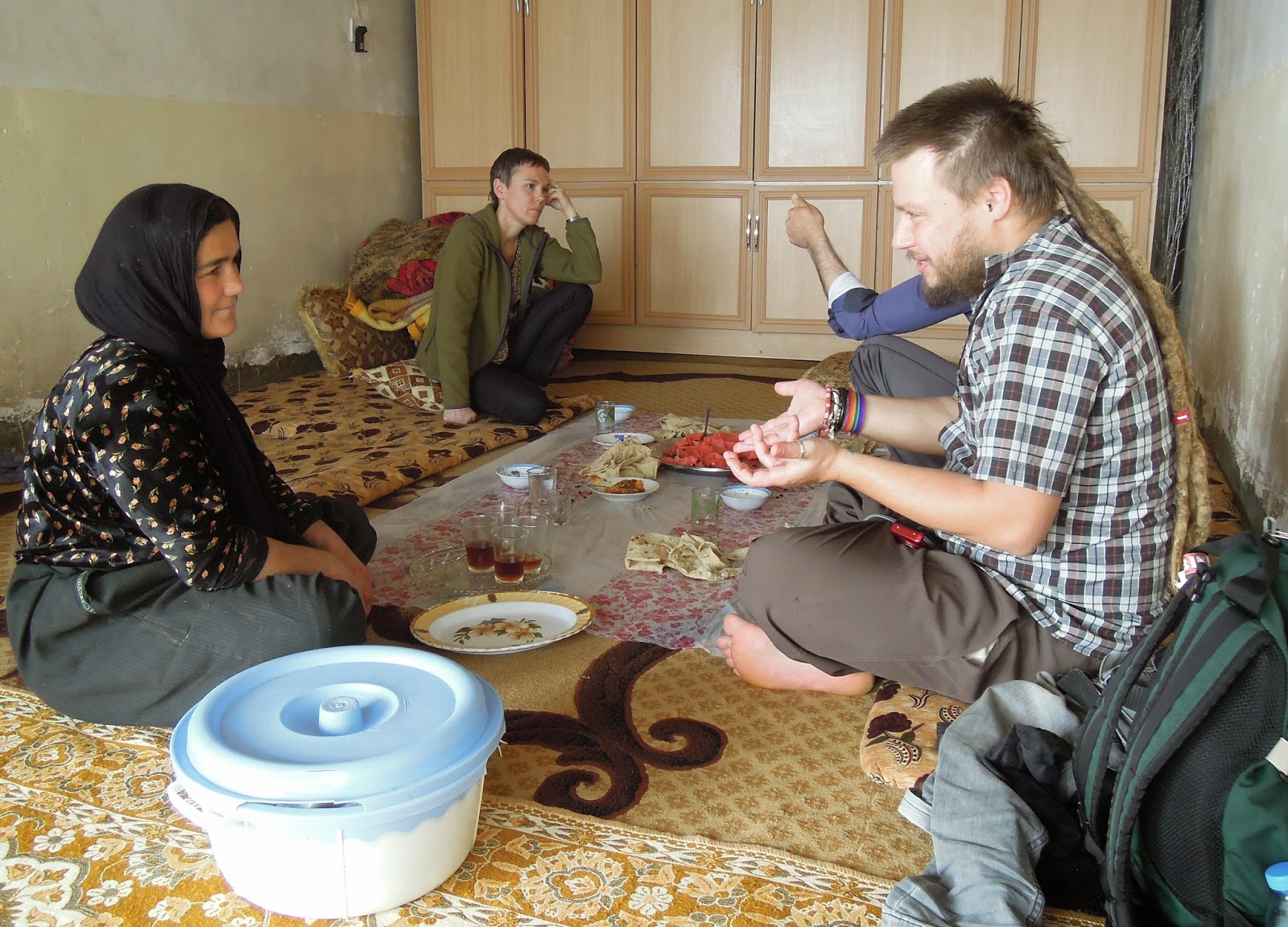
My colleague, Lukasz, speaks with Latif's mother while we all drink tea.

I met this man in the bazaar. When I asked for a photo he removed his hat
 from his head and put it on his knee.

The football field that is close to the CPT house.

This was a demonstration where people marched down the main street in Sulaimani to protest a barrier ditch being built by Iraqi Kurdistan authorities in between IK and Syria.
 A young man watches a dance in the pow wow in Winnipeg on Aboriginal Day 2014
 A family sits under a tree waiting for their turn to dance at the pow wow on Aboriginal Day.
 A CPT delegation in Grassy Narrows presented a 
musical evening for members of the community
 The delegates attended a pow wow at the  Grassy Narrows School 
and were invited to dance.

 A family meets their soldier son on the biggest holiday of the Kurdish year- Nawroz
A young couple celebrating Nawroz
 A shepherd leads his flock out to pasture past an historical wall
A scarf salesperson in the bazaar
Father Jens with some of the children who are living in the small monastery in Sulaimani
 Christmas Day mass
An grandmother living in Virgin Mary monastery

A Syrian mother and daughter from New Arbat camp
 A handwork exhibition in the New Arbat camp
My favorite photo of the year. It was an accident as the woman turned her head just as I clicked. I thought the photo was ruined, but when I put it onto the computer I loved it- the white background brings out the colours and I really like that none of them are looking at me. This is difficult to accomplish!