Pages

Showing posts with label CPT. Show all posts

Tuesday, October 6, 2015

Glimpses of Iraqi Kurdistan in summer 2015


I have now been back in North America since 6 August. I have moved through the re-entry staying in my house time, and began to move out more. Part of the way that I work through the sadness and mourning the loss of being in Iraqi Kurdistan is to look at my photos. I can remember the people I have sat with and laughed with and  spoken with for brief and longer times. This will be a selection of photos so you can meet some the people that I met and see some of things I saw on this stint- 19 May to 6 August, 2015. (Click on the first photo to see them in a larger format.)
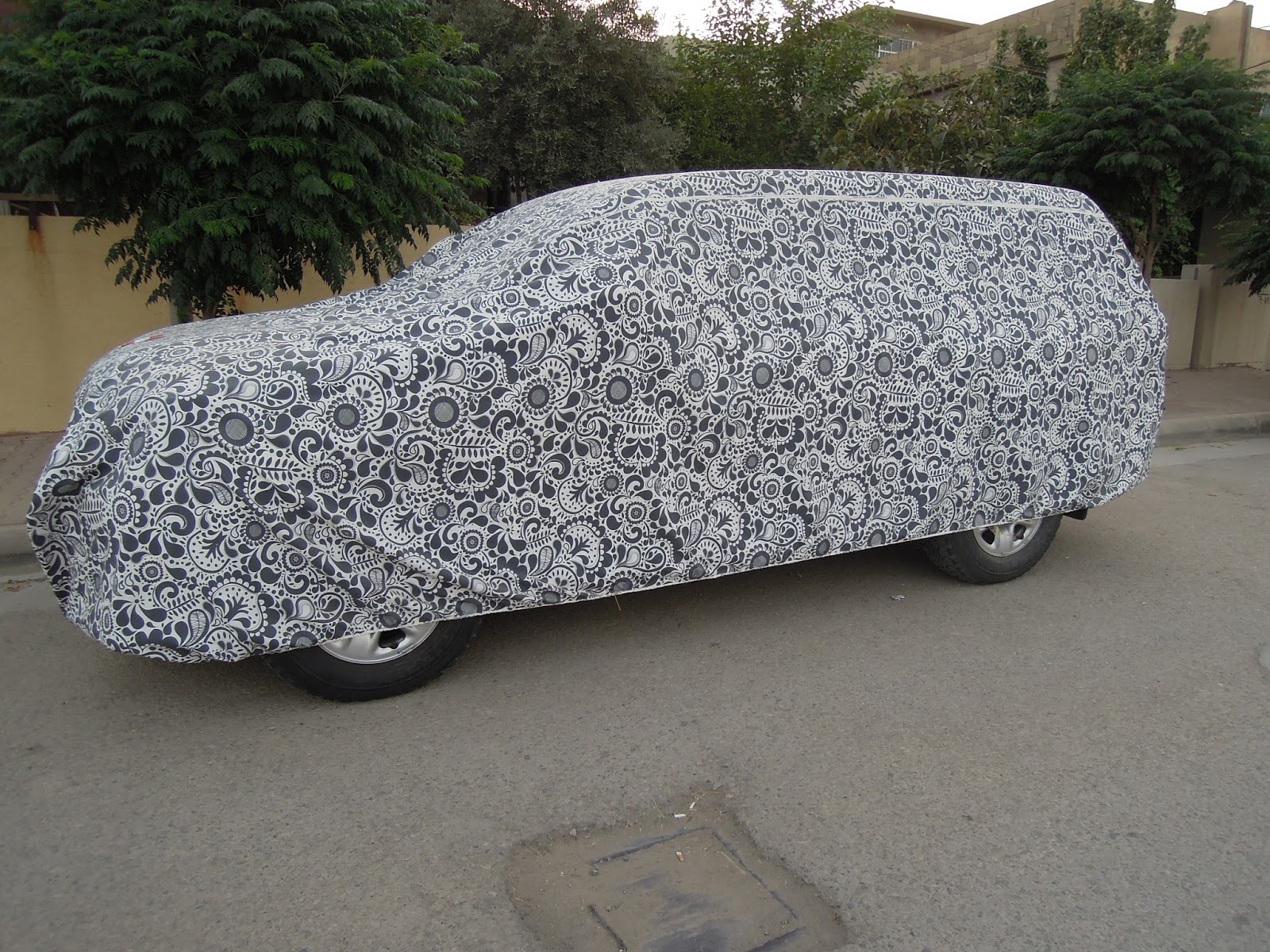
The sun shone the whole time I was in Iraqi Kurdistan. Some people cover their vehicles to prevent sun damage and to try to keep them a little cooler. This cover reminded me of a 60's Volkswagen van. But when I got closer I saw....

 .......where the fabric came from. They must have bought the Ikea store out of the pattern!

 Our team visited the lovely village of Gulan, These little people peered out at me from behind their house gate. It is a good way to keep them out the rocky trail that can have cows and geese and goats travelling them an various times during the day.
There are wonderful fruit trees in Gulan. Here we were picking a small sour fruit that was a cross between a plum and a cherry.


People in the bazaar


Ice is very important to keep the  drinking water cold, cold  in the hot, hot summer heat. It is  bought in huge chunks and then broken into smaller pieces that fit into old freezers or small containers  that hold the 250 ml bottles of water.

 There are a few small shops that sell rugs and carpets made in Iraqi Kurdistan. Many of them were created at least a decade before but they are still so beautiful and colourful.
 Most people who shine shoes to make a living are men but this young girl had set up her stand on the side of a laneway. She granted me a photo. The rubber sandals are ready to cover the feet of someone who might give her their shoes to shine.


 "Please take my photo", this young boy asked me. He sells larger plastic bags for 250 Iraqi dinars (20 cents) to try to make a living for him and his family.
 The people who live in nearby villages bring seasonal  produce, either picked in the wild or grown in their gardens, to the bazaar. They sit on the sidewalk with small scales and sell it to the city folk.

Around the main square are many booksellers. This man was utilizing some spare time
to peruse his merchandise.

Iftar (breaking the fast) on one evening during Ramadan
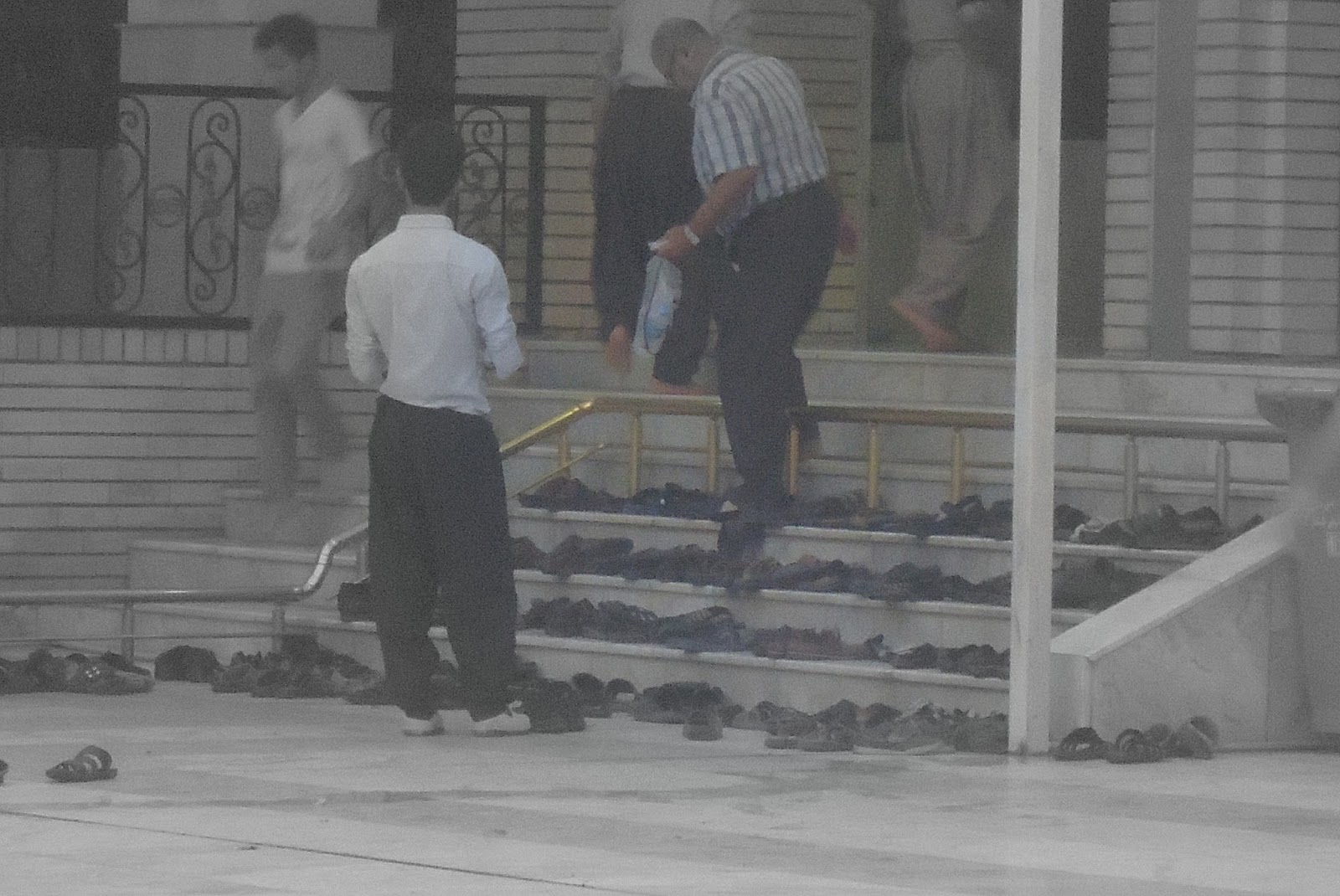
 The men take off their shoes before entering the mosque.
 I think they must be very secure  in where they place their footwear, in order to
quickly find them.

 Vendors selling their food and tea on the street
 Musicians gatherered around the instrument seller's blanket

 This girl was selling candy floss for a sugar boost.
I marvel at the security of a cloth placed over merchandise and how things do not get  stolen.

Cooling down in 45-50 C summer weather


The team went for a wonderful picnic by this river. This Kurdish couple seemed to enjoy
 fishing together in the cool water.

 Mohamed and Rezyar showed us how to wash the floors in the Kurdish way. First, you bring in the hose and flood the floor with water (or you could use a bucket of water).
Second, you use a large squeegee to push the water (and the dirt) out the door.


Tuesday, March 19, 2013

Loving my dancing shoes

OK. I have not done part 2 or 3 yet. But here is a quick post before I head to the plane to Toronto, Frankfurt, Istanbul and then Sulaimani.

In September 2012 I received such a lovely gift from two friends, Lukasz and Ramyar. They had both been in Colombia at the same time and spent a day heading to the market and choosing from the many, many unique shoes, a pair of mola shoes as a gift for me. It was all the more miraculous because they are so beautiful and they fit me!!

For those who don't know, a mola is a wonderful art form. E-how.com describes it as, "Kuna tribeswomen living in Columbia and Panama use mola applique to create intricate textile designs that feature brightly color fabrics and bold geometric images. Mola applique is a form of reverse applique that incorporates three or more layers of fabric.

 
This is a small section of an astoundingly amazing mola," The Peoples of the World" (by Fumiko Nakayami),  hanging  in St. Ethelburga's Centre for Reconciliation and Peace in London, UK. The whole thing is 4 metres and 2 metres and contains 40 panels. 

The molas can be very large to very small, as the shoes are. And every pair of shoes is unique. A number of people have thought that they are painted, but not so. Every colour is hand stitched.

Now the funny thing is that I was carrying them home in my suitcase and as I sat in the Frankfurt airport I looked over and saw a beautiful woman. As I glanced at her I was drawn to her feet because there was another pair of Colombian mola shoes. I had to go and talk to her. I said, "Are your shoes from Colombia?". She grabbed my arm and said excitedly "you know where they come from!!!". She told me that she was from Kenya and had known about the molas. So when a friend had visited the country she asked her to bring her back a pair. It was a very nice connection to make.


I thought that I had taken a photo of the rest of her body too, but it must not have turned out.
 

So my shoes are very comfortable and they have broken in very nicely (when I told my poor team mate that he looked at me in horror, "they are broken already?". I assured him that "broken-in" had totally different meaning and was actually a very good thing).

I am not taking them back to Iraqi Kurdistan because the dust of spring and summer will really dim the vibrant colours. But they will be waiting for me in Winnipeg- my new dancing shoes.

Wednesday, December 12, 2012

Back to October- Wedding celebration

As I sit here in Bammental, Germany I am looking at the photos of my time in Iraqi, Kurdistan. I realize that I have not posted about my first Kurdish wedding. This was celebrated on the last day of Eid. in October.  CPT Iraq Kurdistan's longterm friend, M, invited us to the wedding of his son. I was reminded again how the lifestyle of the Kurdish people is so different than mine. The wedding had been planned for four days earlier. However, a relative died and that took precidence. So the date of the  wedding was changed. This would be unheard of and almost impossible in my culture where invitations go out months ahead and venues and caterers are paid for as well.

I really enjoyed the day in the foothills of the Quandil mountains, sitting on the ground eating with the women, and dancing to the best of my ability in Kurdish style. The bride and groom are not pictured in this post because due to his job he asked us not to put their pictures onto the internet.

 
Rest stop at Gali Ali Bag . Pat T, me Lukasz F. Rosemarie M.
 
 
Preparation of the meal
Young men preparing to serve the meal
The women and younger children all seated around the tablecloth on the ground. Bread is being distributed to go with the rice, beans in tomato sauce, chicken and mutton.
 
Clean up. Put all the disposable dishes and scraps of food onto the tablecloth and roll it up.

Collecting the coloured bits of paper from the poppers.
 
 All ages come to the wedding.
Old...
.. and young.
 
Patrick and Rosmarie trying their feet at dancing.
Rosemarie asks our constant taxi driver, Soran, if he wants to dance. One can do that when you are 80 years old.!
After I took some photos of some girls, they wanted to take one of me. Here I am in front of the glorious Quandil mountains.
 
Pat, Lukasz and I join the dance.


Wednesday, November 7, 2012

Guest post- "Late Nights in Ranya"

This post is written by my team mate, Patrick Thompson. I was there that night, although I was not awake as late as he was. (I regretted it the next morning when I heard what he had experienced).  In his description he makes me feel like I was back there in the dark in Ranya.


The chill of the night was kept at bay by the constant shuffling and stamping of feet on the soft short grass and the rhythmic shaking of our shoulders.
We were dancing, Kurdish style. The long semi circle of men and women holding hands tightly bunched, shuffled in time with the drum and oboe. Cheers, whoops and shouts exchanged between the excited dancers.
The semi circle multiplied, there was two, maybe three with individuals dancing, twirling and hopping between them.
 These dancers represented the world.
 
Kurdish, Turkish, Arabic, Assyrian, Persian. Christian, Muslim and Yazidi. Standing side-by-side, dancing, shuffling, twirling to the rhythm of the drum to the melodies of the oboe.
Politically the situation in and around Kurdistan is difficult, complex. The conflict in Syria, hunger strikes and military action by Turkey, threats of war against Iran not to mention the struggle for independent Kurdistan as a whole. The politics, fueled by money and power, racism, xenophobia and old militaristic alliances, has little to offer the common citizen any more, yet it controls everything. Business is done, the fires of war are stoked, accusations fly, and the people suffer.
But here, entranced by the music, the common bound of all people, the politics ceased to be. Relationships were built on mutual respect for each other’s gifts, talents and passion and the struggle to push their talents to the limit.
The Ranya cultural festival was a hotpot of music and dance from around the region. Two nights of bright lights and camera crews, aimed at a stage providing an opportunity for young performers to entertain more than 5000 people. They all reveled in the opportunity and didn’t disappoint.
But it was the after show party, the after hour activities that really showed the spirit, the joy and the passion of this ethnically, culturally and religiously diverse group of people. As the performers gathered to entertain themselves, they no longer performed, they played and played and played into the small hours of the morning, sharing songs of love and lost, life and death, dancing, clapping and stomping the beat, or holding back, in solemn silence, as a Mamosta (teacher) shared an unaccompanied ballad that touched the heart of every soul in the room.
Politics’ is complicated, it creates aims it fails to achieve, deadlines it fails to observe, promises never fulfilled, budgets that never match reality. All of which are an excuse used by one side against the other, who in turn act the same.
These politics stand in the way of peace. Amongst the dancers I stood shoulder to shoulder, a smile on my face and a laugh in my voice as my feet tapped in time with theirs. We danced; Kurds, Turks, Persians, Arabs and me, the British man, and there was peace.
Our people have struggled against each other for centuries, the oppressed and the oppressors, fought for money, power and control yet here, as the music played, there was peace.
In the end, it doesn’t matter who has the power, it doesn’t matter whose president or prime minister or which party has control. In the end all they want is your vote, you’re “OK”, so they can stay in control, lining their pockets, satisfying their interests. Real change, change that moulds history, never comes from the top but from the people; the musicians, the poets, the artists, the dancers, the singers, the appreciators, people of joy, passion , peace and love.
 
The beautiful hand embroidered  costume  of the Christian dancer. They are part of community who had lived near Mosul, Iraq and have moved to Dohuk, Iraqi Kurdistan for security and peace.


Monday, September 24, 2012

Looking for the rage the media speaks of...

I am back in Sulaimani again. Before I flew I sat in the CPT Aboriginal Justice Team's house in Toronto and read of horrific things that were happening in the Middle East. I looked at maps that showed where these things were talking place and the blue dots that covered many, many places in the area where I was headed. I knew that my friends and extended family might be wondering why I was heading out on the plane into the area where this was taking place.

However, as I flew I knew that I was not worried. I spoke to an older French man on the bus shuttle. His last words to me were, "I hope you come back alive". But I was not worried. I saw no evidence in Istanbul of this rage despite it being the Turkish weekend day off and seeing the streets filled with Turkish people in conservative dress. 

On my first day here I asked our advisor and friend, Mohammed, what he had observed. He said that all had been quiet although he had heard of a small protest in capital city, Hawler/Erbil. I Facebook chatted with another friend of our team whose home is up north in Cholman . He is a journalist and I expected that he would have heard of demonstrations of rage. He said that all he knew of were  peaceful demonstrations in Hawler, up north and in Sulaimani.

Avaaz website posted an article talking of the media's hyperbole of the situation. It spoke of the tiny percentage of Muslims who were taking to the streets and the even tinier who were using violence. The vast majority, even if upset at the content of the youtube movie, were going about their daily lives.
http://en.avaaz.org/783/muslim-rage-protests-newsweek-salafists

This is what I see in Sulaimani. I have not received any more attention than usual due to my foreignness. However, I relished the attention I did get on Friday afternoon on my walk home from the bazaar.

First some background information:

Last year when I arrived the bathroom tap was dripping a lot. No one else seemed to mind enough to act, so I took it upon myself to give it a try. I fugured that all it needed was a couple of little rubber O rings. Well, first I had to get it apart which took about 7 trips to the nearby tiny hardware store to find the right size of wrench/spanner. Then, once it was apart I realized that it was a whole contraption inside that tap. So I took it over and tried to find the right size. (Of course with each trip I had to wait until all men were served, plus a few more that came after me. I learned to be a little more assertive!)

But alas- it still was leaking and so I remembered a special plumber white tape that can be used to wrap around pipes. I decided to try a new larger place. I wore my big shoulder bag plus a wool shawl. Amazingly , the proprieter was a woman, the first I had ever seen  serving in a shop.


And she had a tiny girl with her. After showing her some masking tape and a piece of pipe that I had brought for such purposes, she knew exactly what I needed. Then I went to pay and the minor catastrophe happened. The little girl had walked up to my legs and was hidden under my bag. I tripped over my shawl that hung low and stepped all over her with alot of my weight. Ah. I felt so horrible as she cried softly and her mother comforted her (and me). Fortunately, I knew the word- biburra, I'm sorry.


I met the family a couple more times when I purposefully went to their shop for hardware needs.

But let's fast track to this week. Team mate Rosemary and I had gone to the bazaar and I decided to take the way home that passed their shop. As I came up to the shop I saw the woman, Nazanin, and her 3 little girls: Sara, Sanaria and little Sima who would no longer fit under my shoulder bag.  They saw me coming and were very excited. As I approached them I could hear Sima saying, Katy, Katy. Nazanin asked us into the house and served a welcome cup of water. We laughed and laughed as I tried to remember Kurdish that I had not touched for 4 months. I felt so happy to be with them.

Thursday, August 30, 2012

What does Vic do while you are away?


I have often thought that there should be a song written for the lovers, who stay behind,  of peacemakers who go away for periods of time. There are many written for the loves of soldiers who go off to war, but I have never heard one for peacemakers. A song-writer friend of mine says that it is on his idea list, but he has a long list!! (Any songwriters out there among my readers?)

When people ask me this question I never really know from what angle they are asking. Are they questioning our sanity, fidelity,or his ability to cook for himself?  Or are they just not able to picture that he can have a life without me? Afer all, he still continues to work at the Mennonite Church Canada offices from 8 am to 6 pm (including the commute) for 5 days in the week.

While I am in Iraqi Kurdistan we Skype every 2-3 days over his lunch hour (we have a 8-9 hours time difference). I can't imagine having this seperation without Skype, although I have heard of long distance relationships back in the "olden days" based on snail mail letters and a twice monthly phone calls.

When he comes home from work he cooks supper and then often relaxes in front of a movie. When I had my first stint in 2011 he set a goal of  writing a lot of movie reviews for movies that he owns and had never watched. He loves writing movie reviews for his blog (www.thiessenbros.blogspot.com) as well as for an internet site and the Mennonite Church Canada magazine.

One of the reasons that we live in Winnipeg is to be closer to his mother and two elderly aunts. So Vic frequently goes to visit them (and they love to feed him too). Our youngest daughter, Katrina and her husband live in the city so he spend time with them too.

Other things that keep him busy are building big jigsaw puzzles, right now it is a 6,000 peice one. And he has many books in our personal library that he wants to read in the next 30 years. And this does not include visits with friends, our small group from Hope Mennonite, other church activities etc.

These are SOME of the things that "Vic does while I am away". It is hard to part and say goodbye, knowing that it will be 3+ months before we can physically touch. But I don't think that he pines away ("My bonny lies over the ocean, My bonny lies over the sea, My bonny lies over the ocean, Oh bring back my bonny to me [to my Kurdish readers, this is an old folk song. A bonny is another word for loved one].

I am so privileged to have a husband who is very supportive of me and the work that I do in Iraqi Kurdistan. He is amazing.

 
Vic and I on our wedding day, 4 August, 1979

Sunday, August 19, 2012

Thoughts on Morning Coffee

Our small church here in Winnipeg, Hope Mennonite, kind of dissipates a little during the wonderful hot, sunny summer months. So in June a list goes around asking for people to sign up to lead our time together on Sunday mornings. With some persuasion (and co-ercion and nice smiles) I convinced Vic to sign up with me for this Sunday, 19 August.

However, then we had to think about some interesting theme to present. Normal sermons etc usually do not happen on these summer Sundays.

The topic came to me as we were watching a play three weeks ago. Winnipeg has North America's second largest Fringe Festival. This is 10 days of around 150 plays (mostly an hour or less in length). We saw  15 plays during those days. One of our earlier plays was one called "Morning Coffee". We decided to see it because there were some Mennonite actors in it and we do like to support Vic's cultural comrades!!

 The two actors portrayed a young couple who had been together for 5 years. Obviously things have been going downhill for awhile but during the hour of the play things start off bad and get progressively worse. We are voyeurs into their fight which uses every bad trick that communication manuals tell you absolutely not to do.  It begins with her entering the bathroom that he has just left and running out holding her nose and telling him just how rotten he smells and how he has always smelt that bad. The blame and miscommunication escalated until I cringed at the dirt they brought up on each other. But just as I thought that this might end in violence they took a minute to pause. In the last line of the play they showed a tiny bit of vulnerability and one said,” I am afraid”  and the other replied ,”I am afraid too”. At that moment their true feeling was expressed and you are left with the idea that maybe they would be able to really talk to each other.
It reminded me of the Nonviolent Communication that I had learned while doing the month long CPT training in 2010. Surely this would be a good topic to bring up in a church service. Surely there are some verses in the Bible that might lead to thinking about how we communicate. Sure enough, there are and one example is Proverbs 12:18-" Rash words are like sword thrusts, but the tongue of the wise brings forth healing".  Vic and I used the book,  Nonviolent Communication: A Language of Life (Marshall B. Rosenberg, Ph.D.) as a resource and it was sure good to go through it again. This way of speaking is hard work and takes a lot of practise. It sure is so much easier in the heat of the moment and in frustration to say,"You are a bunch of slobs.  Why don't you ever clean up after yourselves"!!! But those kind of accusations just seem to rouse up anger and do not really accomplish much.
Interestingly enough we had to use this kind of communication on our way to church. We don't argue very often but one point of problem for us is that Vic was trained by his bus driver Dad to talk loudly at other drivers, traffic lights and other things during the whole drive. I am a person who takes what the road throws at me as part of the experience of being in a car. So, I was talking about some point of the presentation we were going to make when he had to exclaim about something a traffic light had just done (turned red). I got mad!! But, it did help to slow down to think about how to speak together about this in a non judging way. We did discover that we seem to have conflicting needs that will have to be figured out. He needs to exclaim at the drivers and lights in order to make the ride more exciting and to ease some of the tension of driving. I need to have a calm ride without loud exclamation!!. It sure was a lot easier when we lived in London, UK without a car.!!!
For those of you who do not know much about nonviolent communication,  there is a formula to help you learn how to speak and communicate differently. Then, hopefully, with practise, it will become an easy thing to remember.
So, the formula is "When I (see, hear, smell).... I feel..... because I need...... . Would you be willing to......
This provides an opportunity to work on ways to meet both person's needs, not a way of forcing the other person to change.
So, our time together as a church this morning was fun. Many people came up to us and thanked us for what we had done. And, the process of preparing it had reminded me that I need to think about this way of communicating a whole lot more.


“Compassion is not religious business, it is
human business, it is not luxury, it is essential
for our own peace and mental stability,
it is essential for human survival.”
- The Dalai Lama -


Wednesday, June 6, 2012

Waiting for my soul to catch up

Last week I spoke with Lisa Martens who was a part of CPT Iraq at the beginning of the Iraq War when the CPT house and office were still  in Baghdad. I told her about the time it has taken me to re-adjust to being in Winnipeg, of staying cocooned in my house for the first two weeks. I spoke of my discomfort at the opulence of our huge grocery stores and large shopping malls. As I walked through them I felt my heart being squeezed and I desperately wanted to be back in Rizgari Taza again buying vegetables and fruit from the outdoor stands just around the corner. I wanted to be recognized by the salespersons and maybe helped with my Kurdish.


Lisa knew the feeling of being lost in her own home town. I felt she remembered exactly what I was speaking about. Then she told me a story that someone had told her. She said that it takes as long as the time it would take to ride a horse from where you were (Iraq) to where you are going (Winnipeg) for your soul to catch up with your head and body. I don't really know how long it would take to ride a horse even if the ocean was not there. But this was very comforting to me. I was not weak or crazy with the sad, lost feelings I had been having. This was something others had experienced.

Since then I had a facebook dialogue with a couple of other CPTers. They too say that coming home is far, far harder then going out to our CPT work. Maybe it is because we expect to feel comfortable with a place where we have lived for many years and that we think we know how things work there. But we don't anymore and there are a lot of things that we don't like anymore.

So, 3 weeks into being back in Canada I feel mostly OK. I am so happy being here with my husband, Vic and I get to see my youngest daughter occasionally. I have planted my vegetable garden and I think that I have fenced it enough that the rabbits that live under my shed won't feast on the lettuce. But I also relish hearing news from my team and from English news sites in Iraqi Kurdistan. And I am glad to have received the news of my tickets for my next time in Sulaimani.


Two pictures of Vic and I. In a couple of months we will have been married for 33 years.

S

Tuesday, June 5, 2012

Disrupted lives- new report and excellent new's report

The current CPT team in Sulaimani,  just released a report about the bombing and shelling of villagers in the Pishdar region of Iraq Kurdistan. Pishdar is the region which includes the village of Sunneh ( where we have been visiting the school ). I was there in November when team mates Marcus and Ramyar began the work on this report. I have watched it morph to  become better and more polished until finally on last Thursday it was released in a press conference at the Cultural Cafe in Sulaimani. You may think that it is too long for you to read, but I suggest at least opening it up and scanning it and talking a look at the photos.

Photos from the press conference held at the Cultural Cafe on Thursday, 30 May in Sulaimani, Iraqi Kurdistan. (Photos taken by Pat Thompson and an unknown journalist).
It was released in two language
 English:
http://www.cpt.org/files/iraq/Disrupted-Lives-Cross-border-attacks-2011-2012.pdf

Kurdish:
http://www.cpt.org/files/iraq/CPT-Jyaneki-Shewenraw-2012.pdf

Also today I watched a very good newscast about the shelling of villages. .HDNet's "World Report" correspondent Willem Marx travels to the mountainous border of Iraq and Iran, where Kurdish rebels are attacking the Iranian military, and in response Iran is shelling Iraqi territory, killing Kurdish civilians and forcing thousands of villagers from their homes.http://vimeo.com/13523382
It is 1/2 hour long but if you have interest in this it is quite worth it.

I am still quite new to this technology stuff and it appears that I can not put the video here because it is not on You tube. I hope that this works for you.