When I entered Iraqi Kurdistan in December I had some extra
cash with me. Several Canadians who had seen presentations by CPTers about the
dire situation of refugees and displaced persons (IDP) in IK had asked how they
could send money to help. I offered to carry the dollars to Sulaimani to give
directly to a small NGO who would know best how to use it.
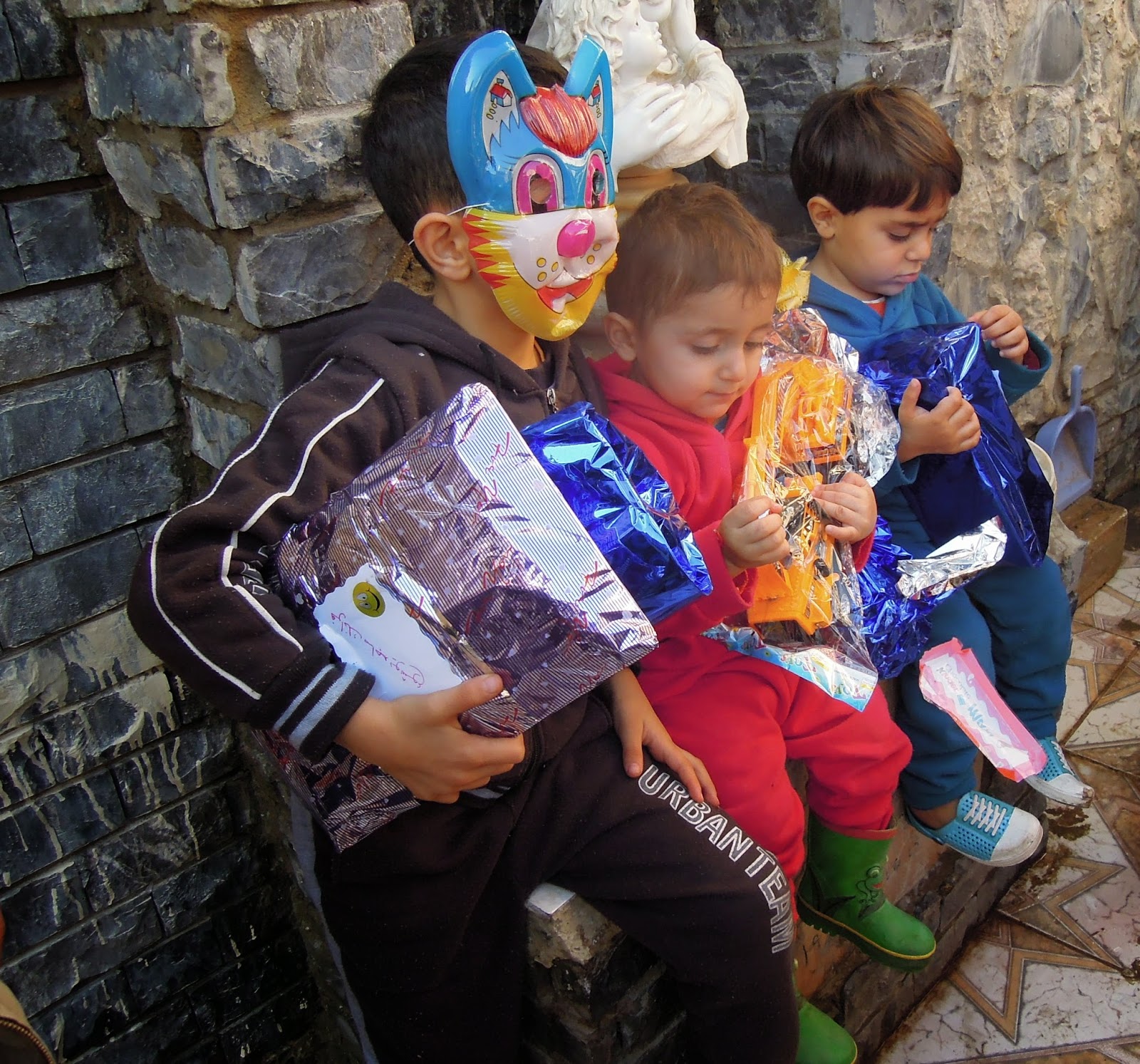
So, when I got to Sulaimani, I called our friend Parween. She gratefully received the money and invited me to go to the bazaar with her. She knew exactly what she wanted to buy and where to go. I was so impressed with her bargaining skills
as she bought 250 warm sweaters, socks and gloves for preschool children in Arbat Camp.
The vendor was very sympathetic and gave her the best price
possible. He also paid the carrying charge for the man who put the huge bundle of sweaters onto his back to carry down 3 stories to the taxi. Lastly he covered the cost
of a warm fleecy suit of clothing for a little girl who wandered into the shop
begging for money and showing the holes in her trousers.

A few days later Parween arranged for her son to drive us to
Arbat Camp. She spoke to the camp manager to discern the best method of distribution.
They decided that the clothes would go inside the compound around the
kindergarten tent. The families would be outside the fence. I did not realise
how important this would be.


As several of us
bagged the clothing to make it easier to hand over, somehow the word went out
to the camp that a distribution was about to take place. Parween had lists of
families with the target age of children and she hoped that she had enough for
every child. At first the families came
in a trickle. They came clutching ID cards specifying their IDP status and the
age of their children. Some brought their little ones to prove their need. Then
the trickle sped up and soon two sides of the compound fence was covered with people several families deep.

The calls and pleading grew loud - hands reaching in and
bodies pressing against the fence. People began to call to me,
“Mamosta/teacher, please, please” and they showed me their child. . They did not know that I had no say who could receive the warm clothing. I had
just brought the money and helped to buy. Now I was standing and watching in
the privileged area- where the ones with the power to give or not give stood.
I felt myself begin to shut down. A numbness began at the top of my head and proceeded down my body The noise receded into the background as I retreated inside
myself. I was jolted out for a moment as the crowd realised they could open the
gate and head directly for the table. Panicked, the distributors pushed them
back , locking them out again.
As I continued to watch I realised that I was starting to resent the
people, the noise, the chaos, the claims of discrimination. I questioned how one group could be so loud and seemingly agressive while another cultural group stood quietly waiting. But all of a sudden something made
me stop. I questioned myself. What was this numbness all about? Why was I allowing myself to hide? What was
my head afraid of?

I pulled my psyche out of the crack it had crawled into and
began to look at individuals- at one mother holding out the ID card; at one
father with his little one in his arms. I tried to imagine their stories. I
tried to put myself into their position. I was startled at the assurance that I would probably fight
like a tiger to receive what was available to meet my family’s needs.

There were still people waiting behind the fence when the
bags of clothes ran out. I was not the one who had to tell the last families to go back to
their tents without the items for the children. I asked Parween how she felt
about the day. She said that she was very happy. Two hundred and fifty children
had warm clothing to face the winter chill. But she also was sad because she
had tried her best to have enough for all the little ones and had failed. From
what I hear, this is the feeling of many people who are trying their best to
provide for the ones in such dire need.