Pages

Wednesday, February 13, 2013

Come join in the dance, Part 1-Bosnia

In my faith community of origin dancing was one of the things that was not exactly allowed. I never did quite figure out what the problem was, but I knew that I could not attend the school dances with my family or church's blessing. That is not to say that I did not go , but that is a story beyond the scope of this post. Although I am now an adult and have made my own discernment about the issue, this "training" does cause me to have the misgiving and feeling that my body does not want to dance. I no longer have the prohibition, but getting the legs, arms and trunk moving takes a lot of concentration and letting go.

However, I have three dancing stories. On these 3 times I have had the privilege of being invited by people outside of my culture, to join in their dance.

The first time took place on my first real trip outside of my comfort zone. In March 1994 I joined a group of young Germans to live in a Bosnian refugee camp in Split, Croatia for 3 weeks.  This was while the Balkan War was still taking place. The German  Mennonite Peace Committee (DMFK) organised groups to go to various camps with the mandate to play with the children. At that time schooling was not provided for the young  refugees and the adults were often so traumatised that they were unable to provide entertainment for the children, so a lot of time they were left without much to do. We loaded up a van with footballs,  craft supplies and games and set off on the two day journey.


We experienced extreme hospitality. Here they had made two large pans of "pita bosna" a traditional food made of very thinly rolled dough layered with onions and potatoes just for us.

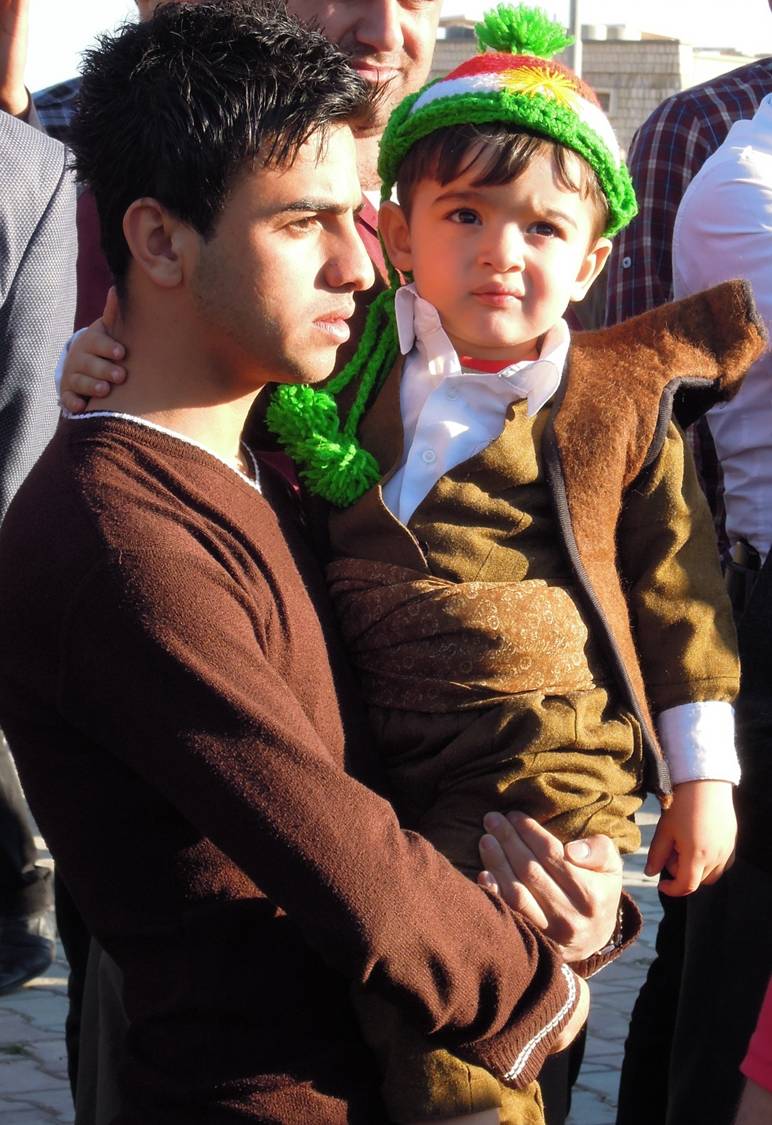
The women did not understand how I came to come to their camp. It was so unusual that my husband would let me come. One day they delighted in dressing me up in the traditional loose trousers and head covering.

 
 I met this woman on the second day of our stay. It was also the day that she learned that her 21 year old son had been killed at the front. I spent a lot of time sitting with her.
 
TWO WOMEN
She-Bosnian Mother
 
I have lost a son
Far off in Bosnia land
I will never again see him
Touch him, rock him, hug him to my breast
Just 21 years -now gone.
I sit here-so helpless
Nothing I can do
But silently weep into my kerchief
He is gone.
 
Me- Short-term Volunteer
 
I see an old woman squatting on the floor
Her eyes slowly fill with tears
She has lost her son
Two days ago she heard the news
Just 21 years-short life
Now-shot-dead
My arms want to hug her, to cry with her
Is it acceptable to touch, to hug?
Three weeks I live with her-learning to sit still and touch.
Very little talking-I don't understand, she doesn't either
So we sit
Sometimes she cries into her kerchief
Sometimes she smiles
Together we sit---together 


Through the 3 weeks we spent a lot of time in the camp, Voljak. There were approximately 80 persons living there in the residential part of a cement factory. They were all from the same village which was near Teslić, Bosnia (north-central Bosnia Herzegovina). In the process of playing we grew to know the parents and other adults. We shared food and times of singing. One evening we sat together in a  room that held 12 bunk beds. Some of these held 4 people for the night. People were relaxed and comfortable. Through our young translators they told us stories of how life was before the conflict started.

They shared a video that showed a large dance festival that was held annually in their village. People of all the heritages came to dance together. They were obviously disturbed as they told of how these connections and relationships were severed as the war began. They had not danced at all since leaving their homes. They had never danced together in the refugee camp.We began to gently explore the possibility of learning a Bosnian dance.
 
One of the bunk beds being used as a couch.
 
THE DANCE
 

Us: We are interested in learning a Bosnian dance.
Them: Oh yes, some day.
Them: Oh yes, but we can't do it tonight. Others are sleeping.
Them: Oh yes, but he has no one to dance with.
Them: Oh yes, but the music player is not here.
Us: OK, but we really want to learn a Bosnian dance
Them: Here is the music man
            Here is a woman
             Forget the people in the next room
             Let's dance!!

Arms on shoulders
Feet moving quickly, avoiding bed posts and coffee cups
Sweat, heavy breathing

Them: Come -- now you must dance

Slowly, then faster
Legs in and out
What a great feeling
We are dancing
They are dancing
For the first time since Bosnia.
We are dancing
Together.


Monday, February 4, 2013

Singing to an Unseen Audience


(Photo- Sandra Stevens)
 

Three days ago  I was a singer in a choir to an unseen audience. The stage was a sidewalk outside of a deportation centre in Chicago, Illinois. The audience was hidden safely behind large garage doors and blacked out glass in six vans. I wondered if the safety is for them, us, or the system that tries to hide the fact that 425,000 undocumented workers in the US are whisked out of the country every year. It does not matter if they act like good or bad people, they are sent away. The choir sang in somewhat croaking three part harmony- "Courage, migrant brother,/ you do not walk alone/ we will walk with you/ and sing your spirits home.”


The current CPT training group braved the bitter cold wind as they attended the weekly vigil at Broadview Detention Centre. Broadview is a detention center run by the Chicago office of the U.S. Immigration and Customs Enforcement (ICE). Every Tuesday and Friday the bus and vans are loaded with men and women who have been rounded up in raids on their homes or workplaces. Many of them leave behind loved ones. They ride in shackles on the bus to the airport to be flown to a land considered to be their homeland, but which many of them have never lived in. One of the delegates, Cory Lockhardt, wrote in her blog about her experience.  http://www.trulylovethyneighbor.com/2013/02/courage-migrant-brothers.html?spref=fb


As I experienced this action today I was taken back to my own training in July/August 2010 on a much warmer day. In my notes that I saved in my gmail drafts  I noted that we had met two of the nuns who had fought the system  to gain the opportunity to pray with the detainees before they were sent off to the airport. I wrote, “ I am so I shocked that in this "Christian nation"  they had to fight for two years to be able to pray for these people on the buses.” These nuns asked us to stay within the guidelines, to not plan surprise civil disobedience or some other resistance. For them the important goal was to make a weekly presence and to provide a small bit of psychological support for the men and women who were leaving their homes. We found out that early in the morning they were also allowed to visit any detainee who wished and gave out cards telling them where they could get physical help when they were unshackled and pushed out into the country on the other end.


 I entered one of those buses along with the young man who would become my son in law and another trainee, to pray with and for the persons there. We wanted them to have an image of someone who cared as a lasting picture of the USA. We could do nothing to change their situation at this time, but we could pray with them and let them know that someone knew of their grief and cared.


As we entered the bus and yelled through the plexi glass barrier (because the intercom did not work) introducing ourselves, the whole busload erupted into clapping . That felt so strange. They were thanking us for coming to say goodbye to them. As we spoke our names one man lifted up his handcuffed arms and pointed to the shackles around his waist and ankles and said, “They treat us like criminals. We are not criminals”. We told him that we knew this. Then we read a short statement that we had prepared and that was translated into Spanish by our team mate. We said the Lord’s Prayer together, joined by most of the people on the bus. Then we stepped down to the ground.


Next we were taken to a van that held 8 men being sent to some Central American countries.  Here we were separated only by a grating and we could speak in normal volumes. As I was introduced as being from Canada, a young man right next to me quietly asked, “What is Canada like?” Searching for the correct thing to say I answered, “Canada is good”. He said softly, “I wanted to go to Canada”. I almost lost my resolve to stay calm.  I could not say that Canada would treat him any better. He had shackles and handcuffs just because he had crossed an invisible line in the sand and tried to stay on the ‘wrong” side.


On that summer day in 2010, after the bus and van had driven away, Laurens and I stood with the rest of the vigil, arms around each other and silently weeping. This was not our country, but we knew that in Canada and the Netherlands such scenarios take place as well. I thought of the privilege I had of owning two passports that gave me such freedom to choose where I lived.


Three days ago, as I sang in the choir to the unseen audience, I heard a gentle clinking sound. I turned around to see a man exiting from a car carrying a large armload of chains and shackles. I imagined that he had been there when they released a group of people, and was bringing them back to the centre to put them onto some of the 1000 detainees in that building so they could be sent out.


The three trainees who were in the parking garage praying on this cold day told us that when the large bus sized garage door lifted they could hear our voices. That means that possibly some of the detainees beginning their journey could also. We sang the song over and over, despite voice fatigue and freezing toes, hoping that in some way it would send them on their way with a tiny bit of hope.

Monday, January 7, 2013

3 Topics: my mother, knitting and ageing.

The day after Christmas my family of origin, the Moorheads, got together at my brother's house for a simple meal and a time to reconnect. My mom told me the story of something that she and her friend  had been doing this year. They are both very prolific knitters. People know this so give them piles of balls of wool that they don't want anymore. Mom and her friend comply and make them into piles of usable items- mittens, socks, small sweaters and wooly hats. This year alone they filled  7 plastic Rubbermaid containers  (at this point she showed me with her arms how big the containers were) to be given to a charitable organisation. Then she said an important thing, " some people go to Iraq to make a difference, but others knit".. This is so, so true. I asked her how many pairs of mittens she had made this year. She did not really know- maybe 50, but that did not include the sweaters and hats, scarves and socks, all sent to keep other people who they don't know, warm.

 
This photo of my mom, Margaret, was taken a couple of years ago, with that year's crop of mitts etc.


I knit too... a bit. While I was in Sulaimani this time I knit two tiny hats and a teeny pair of socks. One was for our neighbour who's baby Nali, is now around 6 months old. The other was for my friend who will have her baby while I am gone. Her sisters-in-law told her that it was meant to be worn and not stored away in a safe place.


The bottle cap is to show you how little they are, just right for a newborn.


Lastly, I have some thoughts that I scribbled down while on a German train, heading to the airport after a week long visit with my daughter, J and her husband. It  too has a bit to do with knitting.

In a Train car from Bammental to Frankfurt Airport

I squeeze into a 2nd class compartment (it has 6 seats facing each other in a seperate room with a door) with only one other person inside, an older womean knitting a sock. I too knit socks- two socks on one circular needle instead of one sock on 5 needles like she was doing. I stir up my bravery to comment on her knitting and  point out my multi-coloured socks to her, knit out of lovely German wool. She nods and smiles.

She seems to think that I should lift my 20 kg suitcase high in the air up to the luggage rack. I convince her that the next station is mine and that the train is already moving, so the bag stays on the floor by my feet.

Then I sit, watching her. To my eyes she looks old, I think much older than I. But, I do remember that in my mind's eye I am still 25. Maybe  it doesn't help that I hang out with people in their 20's and 30's. We talk of things like falling in love and discovering their future and defining beliefs. These are not things that  52 year old women usually speak of- like grand kdis and retiring.

Certainly, I thought, I am not as old as her.

I also don't think it helps me when I sometimes receive comments from Kurdish people like, "my mom is 52 too, but she is OLD" . And my white hair shines forth- not covered by dye or a head covering. I think that it explains why I have been  asked if I am Swedish. I can hear them thinking, " that woman has white hair, but she does not mesh with my understanding of someone with white hair. She must be Swedish."

Then again, my hips feel very old when I sit for a meal cross-legged on the floor. Even the very old Kurdish women with black head coverings do not stifle a groan when they stand up, like I do.

Am I older or is my mind's eye correct? I did not ask the knitting lady how old she was so I will never know how I compare.

Saturday, December 29, 2012

On Kurdish children and the Feast of the Holy Innocents

Yesterday I was honoured to have my friend Chris Sabas nominate me for CPT's, "Twelve Days of Christmas" peacemakers. It was published on "Christian Peacemaker Teams" Facebook page  on the 4th day of Christmas which is known as the Feast of the Holy Innocents. [the day that the Bible tells of King Herod killing many children in his search for the child Christ]. This is because some of the writing I have done while on team in Iraqi Kurdistan has been about the impact on children of violence (especially the bombing and shelling). The link to the site is.
https://www.facebook.com/home.php#!/photo.php?fbid=529570520396174&set=pb.119985174688046.-2207520000.1356798464&type=3&theater
I hope that those of you without FB can still open this. If not please send a comment.

As I remember so many of the little ones I have met while in Iraqi Kurdistan or some of the ones I have seen just for a minute, I want to post some of the photos I have taken. It is strange to walk the streets here in Winnipeg and to have children look down as I walk by. I am so used to being greeted and spoken to by the Kurdish children. Of course, I realize that I am an unique sight there. They can tell just by looking at me that I am a foreigner and they are curious about me.  I really enjoy taking the moment to talk to them. Usually they try to speak English and I try out my Kurdish. This is a bit complicated sometimes but fun.


This is a child that I did not meet. It is a statue in the town of Chamchamal in memory of 11 year old Germian. He was shot by security forces during the early days of the 2011 demonstrations in Sulaimani province. 

Wednesday, December 19, 2012

Thinking about hunger strikes.

The events of the last three months have made me think a lot about hunger strikes. Now, I will confess at the outset that I am not one to voluntarily do without food. I have fasted for very short periods of time but it is not my preferred method of showing dissent or solidarity.

But during my last stint in Iraqi Kurdistan I have observed and read about many people who are choosing to use this as a way to express their desire for change. It seems that most are very vulnerable people who see no other way than to put their whole health into jeopardy to tell their governments and the world that change has to happen.

First I was on team with my good friend Bud. He and I spent a month together in Chicago in summer 2010. We were paired together as "buddies" to spend some time each day talking about how we were experiencing the Christian Peacemaker Training. Bud is a person who chooses to fast quite often. This is usually in solidarity with vulnerable people who he is walking alongside.While he is fasting he often sits with the rest of the team while we eat supper, just to be together with us. Sometimes he even cooks a meal for us.  When he is at home he often fasts in solidarity with people in prison in Guatanamo Bay. This autumn he fasted in solidarity with the 900 Kurdish prisioners in Turkish jails.
My friend Bud Kurdish dancing with Sunneh school chilrden
 
When I was leading the October delegation we spent two days in the Kurdish area of Turkey. Our contact there told us that hundreds of Kurds who are in Turkish prisons had begun a hunger strike. Soon this included 900 prisioners and thousands of Kurds on the outside who fasted in solidarity.
 
CPT were observers of a march in Sulaimani of  Iraqi Kurds  in support of the Turkish Kurds.We saw Kurds who are in a semi-automous state in Iraq say to the world that Turkish Kurds deserve at least what they were asking: basic human rights for their leader O who is in prison, the right to use Kurdish freely in educating their children and the right to use Kurdish in the court system. Many of the fasting persons did not eat anything for 68 days. Many were near death when word came from the leader asking them to stop the protest.
Parween (in flowered shirt), friend of CPT Iraqi Kurdistan, was a leader in this march of solidarity.
 
.
The march happened on the 55th day of the hunger strike.
 
Anotehr  hunger strike is still happening right now in Iraqi Kurdistan. Six disabled men stopped eating on 19 November. They were living in a tent outside of the Kurdish parliament office in Sulaimani. They are asking the government to provide living wage benefits for the disabled people in the region (including the two disputed cities). The men are willing to face death to draw attention to their cause as they feel that they are unable to continue living and tending to their families on the income the government  currently provides them.
 
On 18 December two of my team mates accompanied the 6 men when they moved their tent and protest to the capital city, Hawler/Erbil. They were hoping that maybe someone from the regional government would finally spend some time to listen to their plea.
Some of the men in their tent in Sulaimani
 
The tent in Sulaimani (Pat Thompson)
(Pat Thompson-photo_


The last hunger strike I have heard of is taking place in my own country.CBC reported on December 12,  " Attawapiskat Chief Theresa Spence is on a hunger strike to try and force a meeting between Prime Minister Stephen Harper, the Crown, and First Nations leaders. She stopped eating early yesterday morning. She plans to drink only water (once in the morning and once in the evening) and fast in two teepees, one on Parliament Hill during the day and another on Victoria Island.
Spence says she wants a meeting to create "a better dialogue."
"[We need] a partnership... as we speak, our people are suffering because of the decisions that are made by the government," she told reporters on Parliament Hill.
"I'm willing to die for my people and the First Nations people," she said. "The pain is too much and it has to stop."

Now 7 days later she is still waiting for the meeting with the Prime minister to happen.

 
 I wonder if hunger strikes accomplish what the people who put their lives on the line want. The Turkish prisioners ceased their protest when O. asked them to stop. The Turkish authorities breathed a sigh of relief because they feared the riots if one of them had died. The goverment made many promises tocompromise on the demands. Now this story is out of the media. Time will tell if the promises are carried out.
 
 Last night the Kurdish regional Governement  security forces (Asiash)  entered the tent  of the Disabled Group and arrested the six men. CPT has learned that the men were beaten and one is still in the hospital under guard. We have not heard of any conversations happening between the men and their government.

 And  8 days into her hunger strike Theresa Spence  is still waiting for the meeting with the Prime minister to happen.

People ready to put their lives on the line in order to bring about change. Waiting for someone to listen to them.


Wednesday, December 12, 2012

Back to October- Wedding celebration

As I sit here in Bammental, Germany I am looking at the photos of my time in Iraqi, Kurdistan. I realize that I have not posted about my first Kurdish wedding. This was celebrated on the last day of Eid. in October.  CPT Iraq Kurdistan's longterm friend, M, invited us to the wedding of his son. I was reminded again how the lifestyle of the Kurdish people is so different than mine. The wedding had been planned for four days earlier. However, a relative died and that took precidence. So the date of the  wedding was changed. This would be unheard of and almost impossible in my culture where invitations go out months ahead and venues and caterers are paid for as well.

I really enjoyed the day in the foothills of the Quandil mountains, sitting on the ground eating with the women, and dancing to the best of my ability in Kurdish style. The bride and groom are not pictured in this post because due to his job he asked us not to put their pictures onto the internet.

 
Rest stop at Gali Ali Bag . Pat T, me Lukasz F. Rosemarie M.
 
 
Preparation of the meal
Young men preparing to serve the meal
The women and younger children all seated around the tablecloth on the ground. Bread is being distributed to go with the rice, beans in tomato sauce, chicken and mutton.
 
Clean up. Put all the disposable dishes and scraps of food onto the tablecloth and roll it up.

Collecting the coloured bits of paper from the poppers.
 
 All ages come to the wedding.
Old...
.. and young.
 
Patrick and Rosmarie trying their feet at dancing.
Rosemarie asks our constant taxi driver, Soran, if he wants to dance. One can do that when you are 80 years old.!
After I took some photos of some girls, they wanted to take one of me. Here I am in front of the glorious Quandil mountains.
 
Pat, Lukasz and I join the dance.


Friday, December 7, 2012

The Turkish green grocer- Pro Palestinian and Pro Kurdish

So, I can't wait to write about this encounter because it was so fun. I will go back and write a couple of more things about my time in Iraqi Kurdistan, but this just happened.

Yesterday I flew from Sulaimani to Frankfurt, Germany, then hopped on 3 trains and ended up in the small village of Bammental, where my daughter, Janelle, and her husband, Laurens, live.
 
Here is Janelle doing her duty at shovelling snow that started this morning, just in time to start acclimatizing me to winter in Canada.

Today we went shopping for some white beans and tomato paste (to make fasouli-white beans in tomato sauce) at a nearby Turkish shop. I want to make a Kurdish meal on Monday for some of their friends.  As we went to pay I asked him where he had used to live before immigrating to Germany. He said, Ankarra. So, then I took the plunge and told him that I had just come from Istanbul the day before. He made a face and commented that Istanbul was not a wonderful city. So, then I said that I had been in Iraq before Istanbul. He told me that was a very "gefahrlich/ dangerous" place. He said that the Americans had destroyed it.

Now, I am aware that speaking to a Turkish man about Kurds does present a bit of risk (Janelle told me later that I was pretty "ballsy"!). But I was watching his responses and took the chance of telling him that I had been in the northern part of Iraq where it is not as dangerous as the south. And then our conversation took an interesting turn. He told me about Syria where maybe the Kurds will have a situation like the Kurds in Iraq (autonomous region) and that he was very much in favour of the Kurds having this. He did not say it, but I felt that he would agree for the same situation in Turkey.

Then he began to speak of how America wanted to put their fingers into everything and how they supported Israel. He then went on to tell us how he thought that Israel was grabbing land from the Palestinians. He said that all conflicts were about wanting more things  then we needed.

All this conversation happened in German and I was quite thrilled that I understood most of what he was saying!! After we paid for our groceries (he thought that we should buy the cans of beans, but we convinced him that we wanted the dry ones)  he asked us to wait a minute. He went over to the shelves of pickles and picked up a very large bottle of pickled peppers, tomatoes, carrots and cauliflower. He told my daughter that he wanted to give 'madam (me)" a gift and gave me the large bottle. I felt like I was back in Kurdistan- gifted by a Turkish man.


I placed the mug next to the jar so you could see how big it is!!